From Forest Trails to Glacial Valleys: Exploring Nepal’s Himalayan Landscapes
From Forest Trails to Glacial Valleys: Exploring Nepal’s Himalayan Landscapes
Posted on: 30 June 2026 | Published by: John William | Category: Travel
Nepal’s Himalayas are not just one kind of landscape, they feel like a journey through several terrains. In a short distance, you can move from green hills and thick forests to dry, high mountains. Similarly, some people explore this beauty by trekking step by step along famous trails. Others choose to see it from above on scenic flights or challenge themselves by climbing high mountain peaks. Moreover, along the way, you can explore the local traditions and customs while trekking. Also, you get to observe their simple local lifestyle. As the scenery keeps changing, the journey becomes even more exciting.
This constant change is what makes the Himalayas so special. With every gain in altitude, the scenery, weather and surroundings slowly change. This keeps the journey interesting from start to finish and equally thrilling. In the lower areas, you hear rivers and see forests that are home to rare flora and fauna. As you go higher the forests become thinner and then disappear, replaced by rocks, open land, and snow. The sound of flowing water fades, and the mountains become clearer and more peaceful.
The Forest and Hills
The lower and middle regions of Nepal consist of lush green forests. Similarly, most of the trekking routes remain draped in the colorful seasonal flowers. For example, during the Annapurna Circuit Trek, you pass through the red, pink, and white rhododendron forests. This makes the journey peaceful and vibrant, especially in spring (March to May). Likewise, the rolling hills continue to unfold which creates a gentle yet majestic frame.
Moving along the paths, you cross suspension bridges that are adorned with colorful prayer flags. They are believed to provide divine protection to the region and good fortune to the trekkers and climbers. Similarly, the cascading waterfalls and fast-flowing rivers add a beautiful contrast with the green hills. The deep river gorges carve dramatic structures as a result of water shaping. Likewise, you can see several terraced farmlands and pastures, where animals graze. This reflects the simple lifestyle of the locals.
The Mountains, Valleys, and Glaciers
The higher regions (above 3,500 meters) of Nepal consist of alpine environments. As you climb higher, the vegetation slowly becomes sparse and opens into wide Himalyan valleys. Similarly, you start walking through the rocky and rugged paths. You can witness the towering mountains up-close. They remain surrounded by glaciers, icefalls, and glacial rivers. Moreover, to behold these views in one single frame, aerial flights, like the Everest Base Camp Heli Tour, are ideal.
Witness the glaciers that are formed over thousands of years and stretch across the landscapes, adding a sense of tranquility. This region is particularly breathtaking after snowfall. The trekking paths and lower villages stay covered by snow dust. Standing here, as you are surrounded by the Himalayan giants, feels nothing less than a wonderland.
Several journeys require one to cross the high mountain passes. Crossing them can be very challenging but rewarding. They offer panoramic views of towering peaks, glaciers, and glacial lakes. However, these sections also have a thin atmosphere and lower oxygen levels. Thus, you need to keep slow elevation gain and take breaks whenever required.
The Panorama When Climbing Peaks:
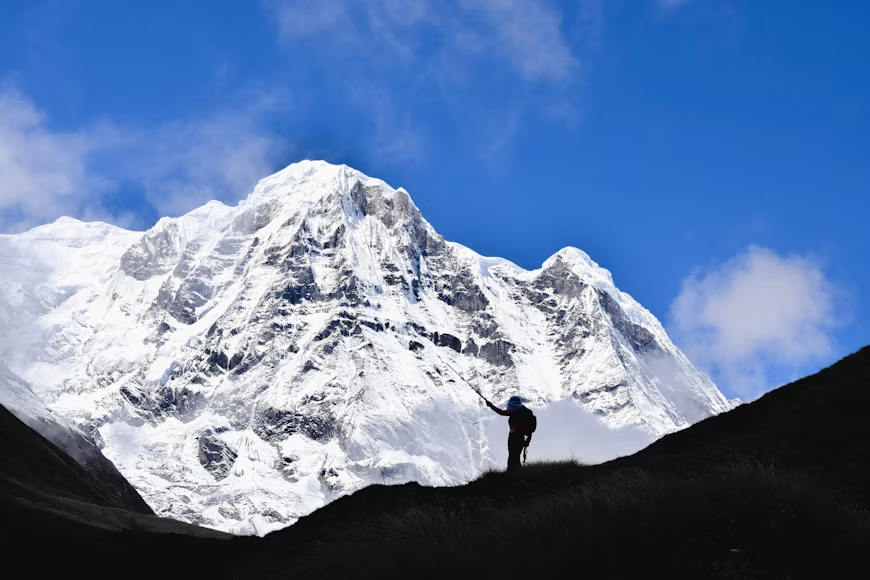
If you thought those were all Nepal has to offer, you are in for a surprise. Especially for those who are seeking opportunities beyond the trials. This small landlocked country is home to more than 30 trekking peaks, serving as introductory peaks before expeditions. Similarly, they only require basic mountaineering skills, like ropes, ice axes, harnesses, etc. However, they present awe-striking views; Island Peak Climbing is its classic example. It is 6,189 meters and does not demand advanced technical skills.
The journey first begins with the classic trails of the Everest region. Thus, you witness the same forests, traditional villages, and monasteries. However, it shifts dramatically as you begin to climb from the base camp to the summit. You’ll find rocky ground and moraine from nearby glaciers. Moreover, you can see patches of ice and occasional flowing meltwater streams. The base camp area is covered with tents and climbers preparing gear. Surrounding peaks rise sharply, but the terrain here still allows for movement without technical climbing.
As you move above base camp the terrain quickly becomes more demanding. You can see the glacial surfaces and uneven ice, often broken by crevasses and ridges. Similarly, the bright snow reflects strong sunlight during the day. The night sky presents the clearest views of the stars and galaxies. When climbing from one high camp to another the surrounding peaks appear like they are floating in the clouds. Also, the route transitions to the steep paths and narrow ridges; all you can see is snow, ice, and rocks.
Seeing It All From The Summit
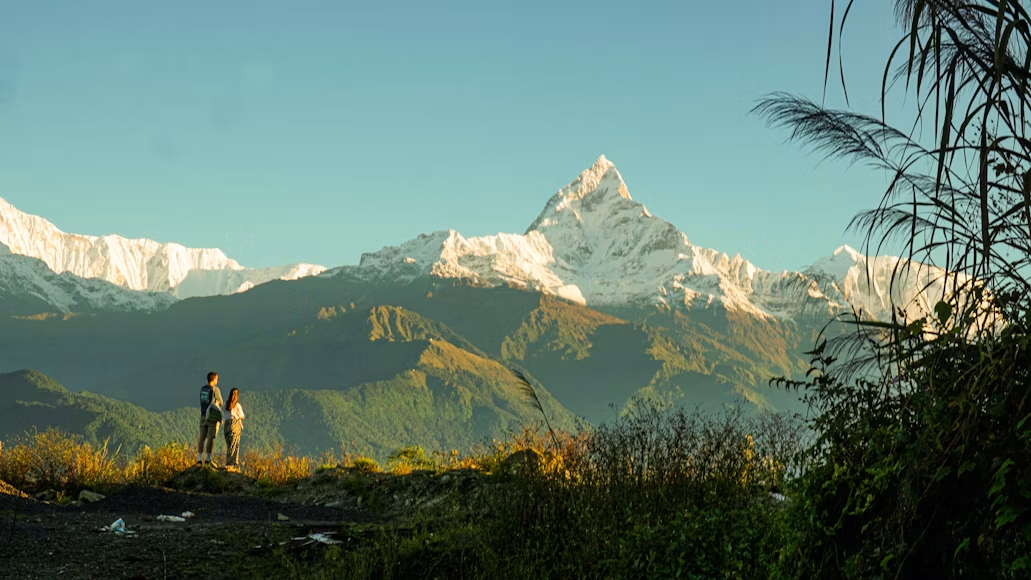
While trekking and climbing give you a close experience of the mountains, the view from the summit is completely different. From the top, you can see the Himalayas all at once—wide, layered and stretching far into the distance. Similarly, the summit presents breathtaking views of the mountain ranges spread out in every direction.
The snow spread in all directions, shining bright as the sunlight gets reflected. Additionally, the valleys, villages, and lower regions stay engulfed in a blanket of clouds. All you can see are the neighboring mountains, sky and the never-ending earth’s horizon. Different peaks rise at different elevations and create dramatic layers.
A Complete Himalayan Perspective
In Nepal’s lower region, you pass through different traditional settlements and villages. Similarly, you can see the terraced farmlands and the locals farming or harvesting crops or herding their animals. This reflects their simple and peaceful living. Likewise, as you start gaining altitude, the landscapes change dramatically and the environment becomes more serene.
The trees get replaced by the stark and dry terrains. The horizons fill with alpine desert-like lands and shrubs and alpine vegetation. Finally, in the highlands, all you see are the glaciers, mountains, icefalls, and rivers. In these high areas, the views become even more open and dramatic.

Recent Posts
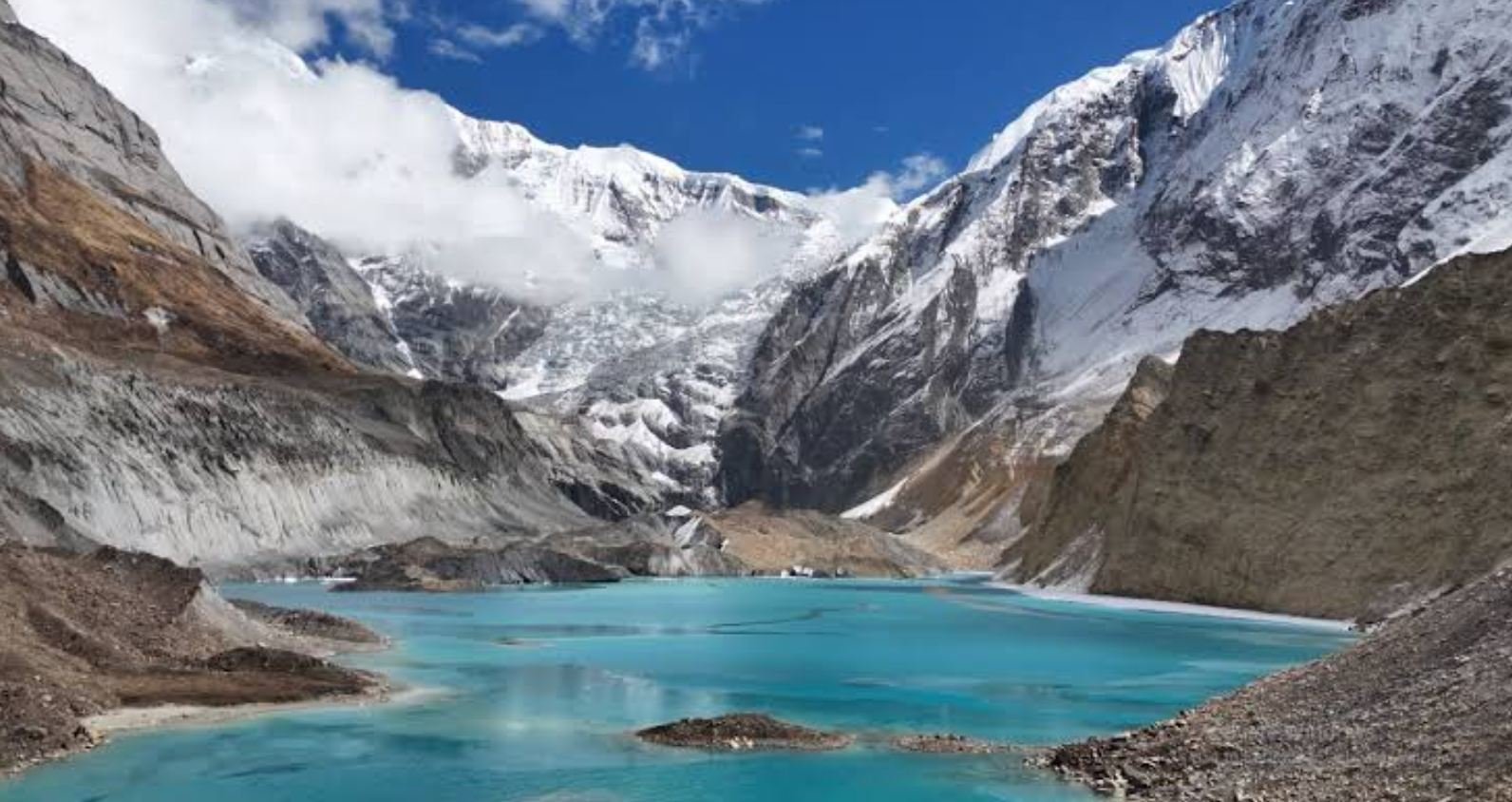
The Simple Backpack Habit That Makes Trekking Easier

Gautam Adani Reclaims India’s Richest Person Title, Surpasses Mukesh Ambani

Semicon 2.0: India's ₹1.27 Lakh Crore Semiconductor Expansion Plan
What's the Best eSIM for India? Comparing Providers
India to Build 100 Airports in the Next 10 Years with ₹30,000 Crore Investment
Serengeti Safari & Kilimanjaro Climbing: The Complete Tanzania Adventure Guide for Choosing Routes, Costs, Seasons and Safari Experiences
10 Smart Ways To Save Money While Traveling In India
Discover Eastern Nepal: Nepal's Most Underrated Trekking Region
Everest Three High Pass Trek vs Gokyo Lake Trek: Route, Difficulty, Cost & Choosing a Trekking Company in Nepal