How Difficult Is the Annapurna Base Camp Trek?
Posted on: 27 August 2026 | Published by: Lhasso Adventure | Category: News
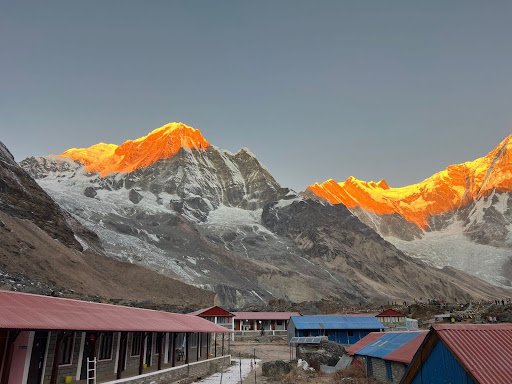
If you are wondering how difficult the Annapurna Base Camp Trek is, the challenge is less about technical climbing and more about how your body handles several days of mountain walking. The trail gradually rises to about 4,130 meters (13,549 feet) and includes steep stone steps, long ascents, downhill sections, and changing terrain. For most trekkers, this makes the journey moderately demanding, especially once altitude and tired legs begin to add up.
What makes ABC interesting is that its difficulty rarely comes from one extreme obstacle. It builds gradually. A steep staircase may not seem serious on day one, but the same type of climb feels very different after several consecutive days of walking. Likewise, a seven-kilometer day at 3,500 meters can feel harder than a much longer walk at low altitude.
So, if you are wondering whether you can handle Annapurna Base Camp, the answer depends less on being an experienced mountaineer and more on your fitness, pacing, comfort with uphill walking, response to altitude, and choice of itinerary.
Annapurna Base Camp Trek Difficulty at a Glance
Annapurna Base Camp reaches 4,130 meters, while trekking days commonly involve several hours of sustained walking over uneven mountain terrain. That combination makes it more demanding than an ordinary multi-day hike, but significantly different from a technical climbing expedition. Lhasso Adventure classifies its 12-day ABC itinerary as challenging, while other trekking operators commonly describe the route as moderate for properly prepared hikers.
|
Difficulty Factor |
What to Expect |
|
Overall difficulty |
Moderate to challenging |
|
Maximum altitude |
4,130 m / 13,549 ft |
|
Walking time |
Commonly around 4–7 hours on trekking days |
|
Technical climbing |
Not required on the standard trail |
|
Terrain |
Stone steps, forest trails, steep climbs and descents |
|
Fitness needed |
Moderate to good cardiovascular fitness |
|
Previous trekking experience |
Helpful, but not essential |
|
Main challenge |
Repeated elevation gain, altitude and cumulative fatigue |
One mistake is judging ABC only by its highest elevation. At 4,130 meters, it is lower than several other famous Himalayan trekking routes, but lower maximum altitude does not automatically mean an easy trek. The constant climbing and descending, particularly around Chhomrong and the Modi Khola valley, can be hard on both the legs and knees. Ian Taylor Trekking also highlights the large number of stone steps as one of the defining physical challenges of the route.
What Makes Annapurna Base Camp Trek Difficult?
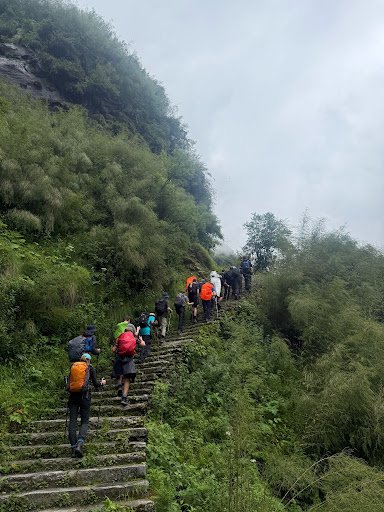
The difficulty of Annapurna Base Camp comes mainly from four connected factors: repeated ascents and descents, several consecutive walking days, uneven trail surfaces, and increasing altitude. None of these is necessarily extreme on its own. Put them together for several days, however, and they create a trek that rewards preparation.
The first thing many trekkers underestimate is the amount of up-and-down walking.
Mountain trekking is not the same as walking the same distance on a flat road. A 10-kilometer trail can include a long descent to a river, a bridge crossing, and then another climb back up the opposite side of the valley.
The section around Chhomrong is a good example. From Chhomrong, the route descends toward the Chhomrong River before climbing again toward Sinuwa. On one commonly used itinerary, the Chhomrong-to-Bamboo section is only about 11 kilometers, but it still requires roughly five hours because of the terrain and elevation changes.
That is why distance alone can be misleading on ABC.
The second challenge is cumulative fatigue. Walking for five hours once is manageable for many people. Walking for five or six hours, sleeping in a mountain lodge, waking up, and doing it again for several days is different.
Your legs may feel fresh during the first few trekking days. Later in the journey, even a moderate staircase can feel noticeably harder because your muscles have not fully recovered from the previous day's effort.
This is also why someone who regularly runs five kilometers may still struggle on the trek if they have never trained for consecutive days of uphill and downhill walking. Cardiovascular fitness helps, but leg endurance and recovery matter just as much.
Then there is the terrain itself.
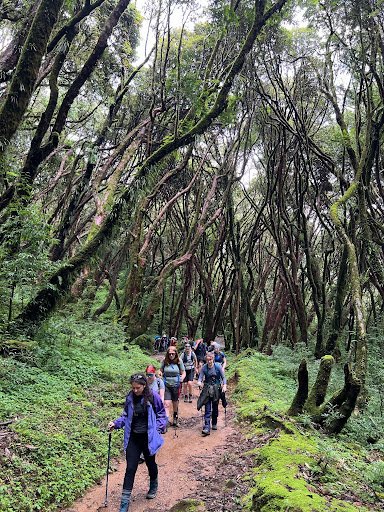
The lower sections pass through villages, forests, and stone-paved trails, while the landscape becomes more alpine as you approach Deurali and Machhapuchhre Base Camp. Depending on conditions, stone steps can be wet and slippery, while higher trails may become colder and more exposed.
The standard ABC route remains a trekking trail rather than a technical climbing route. You normally do not need ropes, crampons, or mountaineering techniques simply to complete the established trail.
That distinction matters: ABC is physically demanding, not technically complicated.
How Does Altitude Affect the ABC Trek?
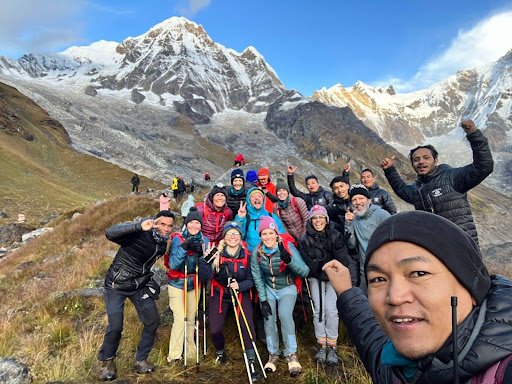
Altitude becomes a genuine part of the difficulty once the trek moves above roughly 3,000 meters, with the route progressing through Deurali at about 3,230 meters, Machhapuchhre Base Camp at around 3,720 meters, and finally Annapurna Base Camp at 4,130 meters.
At these elevations, lower atmospheric pressure means your body has less oxygen available than it does at sea level. Even someone with strong cardiovascular fitness may notice that climbing becomes slower, breathing becomes heavier, and ordinary effort takes more energy.
Fitness does not guarantee protection from altitude sickness.
According to the CDC's high-altitude guidance, the rate of ascent and the altitude at which a traveler sleeps are important factors in the risk of developing acute mountain sickness. Gradual ascent gives the body more time to acclimatize.
Common symptoms of acute mountain sickness can include headache together with fatigue, dizziness, nausea, or loss of appetite following an ascent to higher altitude.
For trekkers, the practical lesson is simple: do not turn ABC into a race.
Walking faster does not help your body acclimatize faster. A steady pace, sensible itinerary, and willingness to respond to symptoms are more useful than trying to prove fitness by reaching the next lodge first.
Altitude is also one reason the last few kilometers toward base camp can feel disproportionately difficult. On paper, the distance may look short. At nearly 4,000 meters, however, every climb asks more of the body than the same climb would at lower elevation.
Which Part of the ABC Trek Is the Hardest?
There is no single hardest section for every trekker, but the route between Chhomrong, Deurali, Machhapuchhre Base Camp, and Annapurna Base Camp contains most of the physical and altitude-related challenges. The difficulty changes as you move higher: the lower sections test your legs with repeated steps, while the upper sections add thin air and colder conditions.
The Chhomrong Section
For many people, Chhomrong is where they begin to understand why ABC has a reputation for stairs.
The trail repeatedly loses and regains elevation. Descending stone steps may feel easy at first, but long downhill sections place considerable load on the knees. Then comes the climb on the other side.
That combination can be more tiring than a steady uphill trail because your muscles constantly switch between controlling the descent and producing power for the next ascent.
Bamboo to Deurali
From Bamboo at roughly 2,310 meters, the trail rises to Deurali at approximately 3,230 meters. One itinerary covers this section in around seven kilometers and four hours.
Seven kilometers does not sound intimidating. The important number is the elevation.
You are entering a zone where altitude starts becoming more noticeable, while your body is already carrying fatigue from previous trekking days.
Deurali to Machhapuchhre Base Camp
The route from Deurali to Machhapuchhre Base Camp is again about seven kilometers, reaching approximately 3,720 meters.
This illustrates why kilometer counts should never be read in isolation on Himalayan treks. Two seven-kilometer days can feel completely different depending on gradient, altitude, weather and accumulated fatigue.
The Base Camp Day
The final approach into the Annapurna Sanctuary brings trekkers to 4,130 meters, the highest point of the trek.
On Lhasso Adventure's itinerary, the journey from Machhapuchhre Base Camp reaches Annapurna Base Camp and then continues downhill to Bamboo, covering approximately 19 kilometers in around seven hours.
That makes it one of the more substantial days on the itinerary. You experience the highest altitude of the trek and then have a long descent afterward.
For some trekkers, the climb to ABC feels hardest because of altitude. For others, the long descent afterward is tougher on the knees.
That difference is important because trekking difficulty is personal. Strong lungs do not automatically mean strong knees, and someone comfortable climbing uphill may struggle more during repeated descents.
Can Beginners Do Annapurna Base Camp Trek?
Yes, Annapurna Base Camp can be achievable for first-time Himalayan trekkers, provided they arrive with reasonable fitness and realistic expectations. The trail itself is non-technical, and previous mountaineering experience is not required, but beginners should be comfortable with several hours of walking on consecutive days.
A beginner is not the same as an unprepared trekker.
Someone may have never trekked in Nepal but regularly hikes, walks, cycles or exercises. That person could be better prepared than someone who has previously visited the mountains but currently leads a very inactive lifestyle.
A useful question is not:
“Have I trekked before?”
It is:
“Can my body comfortably handle repeated uphill and downhill walking for several days?”
A beginner is more likely to manage ABC comfortably if they can already:
- Walk continuously for three to five hours
- Climb stairs without becoming exhausted quickly
- Recover reasonably well after a long walk
- Carry a small daypack
- Walk the following day again without severe muscle fatigue
Beginners should also be prepared for the non-fitness side of trekking.
Mountain lodges are simpler than city hotels. Temperatures change considerably as elevation increases. Weather can alter plans. Mobile connections and everyday comforts may be limited.
Those things are not physically difficult, but they contribute to the mental side of trekking.
A person who expects everything to run exactly like a city holiday may find ABC harder than someone who accepts that mountain travel requires flexibility.
How Fit Do You Need to Be for ABC?
You do not need elite athletic fitness for Annapurna Base Camp, but you should have enough cardiovascular endurance and lower-body strength to handle roughly four to seven hours of mountain walking on multiple days. Lhasso Adventure's route data, for example, includes several days in this range, while other ABC operators commonly estimate around six to seven hours of daily trekking.
More importantly, your training should resemble the demands of the trail.
Running on a treadmill certainly improves cardiovascular fitness, but ABC involves much more than steady forward movement.
Your preparation should include:
- Uphill walking to build cardiovascular endurance
- Stair climbing to prepare for the stone steps
- Downhill walking to strengthen the muscles that stabilize your knees
- Squats, lunges and step-ups to improve leg strength
- Walking with a daypack so your shoulders and back adapt to carrying weight
- Back-to-back training days to prepare for cumulative fatigue
The downhill component is often ignored.
People naturally train for climbing because uphill walking feels harder. But long descents can create significant muscle soreness and knee discomfort, particularly when repeated over several days.
Trekking poles can help with balance and can reduce some of the impact during steep descents, especially when legs are tired.
The goal of training should not be to become fast.
It should be to reach the point where five hours of walking feels sustainable rather than exceptional.
Does the Itinerary Affect the Difficulty?
Yes. The itinerary can change the difficulty of Annapurna Base Camp considerably because daily distance, sleeping elevation, altitude gain, and recovery time determine how much stress your body experiences. Two travelers can reach exactly the same base camp and still have very different trekking experiences simply because their itineraries are paced differently.
A shorter itinerary is therefore not automatically a better itinerary.
Trying to save one or two days can mean combining sections, increasing daily walking time, or gaining altitude more quickly. For a fit trekker, that may still be manageable physically, but altitude acclimatization cannot be improved simply by walking faster.
A better way to evaluate an itinerary is to look at the actual progression.
For example, Lhasso Adventure's Annapurna Base Camp Trek itinerary moves through Chhomrong at around 2,170 meters, Bamboo at 2,310 meters, Deurali at 3,230 meters, and Machhapuchhre Base Camp at 3,720 meters before reaching ABC at 4,130 meters.
Looking at those numbers tells you far more about potential difficulty than simply seeing “12-day trek” on a package page.
When comparing itineraries, pay attention to:
- Daily walking hours
- Distance covered each day
- Elevation gained
- Sleeping altitude
- Large ascents or descents
- Recovery opportunities
- How quickly the route moves above 3,000 meters
A thoughtfully paced itinerary does not remove the physical challenge, but it can make the trek far more manageable.
How to Make the ABC Trek Easier
The easiest way to reduce the difficulty of Annapurna Base Camp is not to search for a shortcut—it is to prepare for the specific demands of the route. Stronger legs, better pacing, a suitable itinerary, and sensible altitude decisions can change the experience from simply enduring the trail to actually enjoying it.
Start with fitness.
If possible, spend several weeks before departure gradually increasing your walking time. Add stairs, hills, and consecutive training days rather than relying only on gym cardio.
Keep your backpack practical.
Every unnecessary kilogram becomes more noticeable after hours of climbing. Carry what you need for the day, but avoid treating your daypack like luggage storage.
Wear footwear you have already tested.
New trekking boots may look perfect in Kathmandu and become painful after three hours on the trail. Blisters that would be a minor annoyance at home can make several consecutive trekking days miserable.
Use trekking poles if they suit you.
They are particularly useful on long stone stairways and uneven descents, where tired legs can affect balance.
And perhaps most importantly, find your own pace.
You gain nothing by matching the speed of the fastest person in your group. Mountain trekking is about conserving energy. A pace that feels almost too slow early in the day often makes much more sense several hours later.
At higher elevations, pay attention to how you feel rather than treating headache, dizziness, or unusual fatigue as something to simply push through. CDC guidance emphasizes gradual acclimatization and notes that altitude illness can occur based on individual susceptibility and ascent profile.
Good trekking judgment is not about proving how much discomfort you can tolerate. It is knowing when to continue steadily and when conditions require you to adjust.
So, How Difficult Is Annapurna Base Camp Trek?
Annapurna Base Camp is best described as a moderate-to-challenging high-altitude trek. Its maximum elevation of 4,130 meters, daily walking of roughly four to seven hours, long stone stairways, repeated ascents and descents, and several consecutive days on the trail make it physically demanding. At the same time, the standard route does not normally require technical climbing skills.
For a reasonably active person who trains beforehand, chooses an appropriately paced itinerary and respects altitude, reaching ABC is a realistic goal.
For someone arriving without preparation, however, the same route can feel much harder than its “moderate” label suggests.
That is probably the most useful way to judge the trek:
Annapurna Base Camp is not difficult because you need to be a mountaineer. It is difficult because the trail asks you to keep walking, climbing, descending, and recovering day after day as the altitude steadily increases.
Prepare for those demands, and the trek becomes far more manageable—and far more enjoyable.
Tags: Annapurna Base Camp, Annapurna Base Camp Vushii, Annapurna Base Camp Trek

Recent Posts
How Difficult Is the Annapurna Base Camp Trek?
Discover Eastern Nepal: Nepal's Most Underrated Trekking Region
Everest Three High Pass Trek vs Gokyo Lake Trek: Route, Difficulty, Cost & Choosing a Trekking Company in Nepal
India Plans to Build World’s Highest Cricket Stadium in Ladakh at 11,800 Feet

Restaurants, Warehouses, Quick Commerce Under Scanner as Maharashtra FDA Cracks Down

40+ Best Travel Credit Cards in India You Need To Know

Abu Dhabi Launches Free UAE Visa Offer for Indian Tourists

Russia Proposes Rail Link to India - What It Means for Trade, Travel and Geopolitics

Ahmedabad Officially Confirmed as Host of the 2030 Commonwealth Games