Two Indian Airports Named Among the World's Most Beautiful Airports 2026
Two Indian Airports Named Among the World's Most Beautiful Airports 2026
Posted on: 16 June 2026 | Published by: Priya | Category: India
The global aviation industry has received yet another reminder of India's rising influence in infrastructure and design.
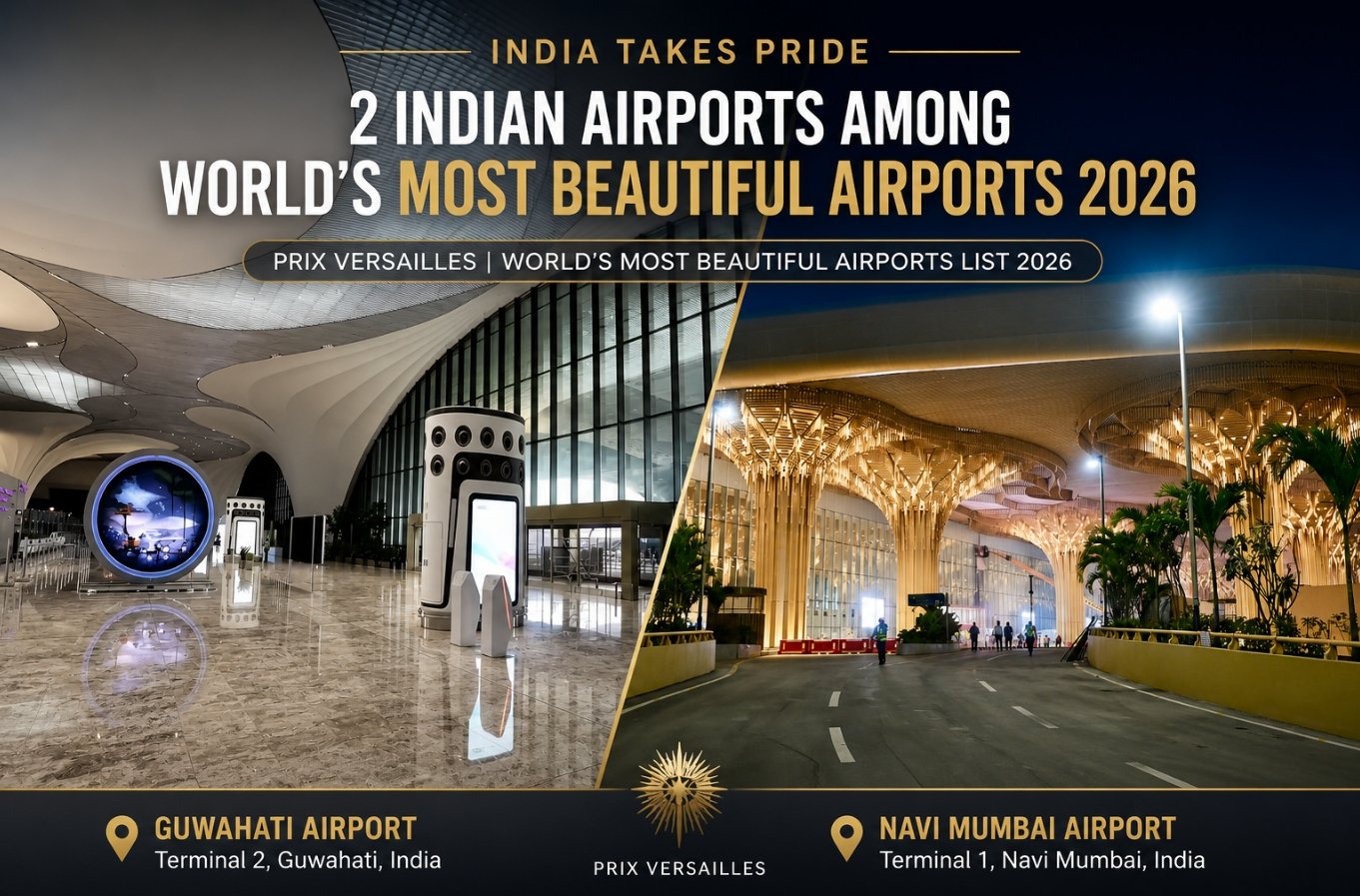
The prestigious Prix Versailles has unveiled its list of the World’s Most Beautiful Airports 2026, and among the seven airports selected worldwide, two are from India, a remarkable achievement that highlights the country's growing excellence in architecture, passenger experience, and sustainable development.
The 2026 list:
- Guangzhou Baiyun International Airport, Terminal 3 (China)
- Frankfurt Airport, Terminal 3 (Germany)
- Lokapriya Gopinath Bordoloi International Airport, Terminal 2 (Guwahati, India)
- Navi Mumbai International Airport, Terminal 1 (Mumbai, India)
- Techo International Airport (Cambodia)
- Pittsburgh International Airport (United States)
- San Diego International Airport, Terminal 1 (United States)
For India, the recognition of Guwahati and Navi Mumbai airports reflects a new era in airport design one that blends cultural storytelling, sustainability, technology, and world-class passenger experiences.
Lokapriya Gopinath Bordoloi International Airport, Terminal 2 (Guwahati, India)
The newly developed Terminal 2 at Lokapriya Gopinath Bordoloi International Airport in Guwahati is much more than an aviation hub. It is an architectural tribute to the rich culture, biodiversity, and traditions of Northeast India.
Few airports embrace their geographical and cultural context as beautifully as Guwahati's new terminal. Located at the crossroads of South and Southeast Asia, the project was designed by renowned architect Nuru Karim, who drew inspiration from the bamboo orchid, a symbol of the region's extraordinary biodiversity.

The terminal's sweeping vaulted ceilings, crafted in organic forms, create a dramatic sense of arrival while subtly referencing Assam's sacred landscapes and indigenous architectural traditions. Fluid ceiling patterns mirror the movement of the mighty Brahmaputra River and its tributaries, intuitively guiding passengers through open and easily navigable spaces.
What truly sets the terminal apart is its deep integration of local identity. Indigenous artwork, tribal narratives, and traditional craftsmanship are woven seamlessly throughout the interiors, transforming waiting lounges and transit zones into spaces of cultural discovery and reflection. Rather than serving as decorative elements, these artistic expressions become an essential part of the passenger journey.
Sustainability also plays a central role in the terminal's design. Through the extensive use of bamboo, passive daylighting strategies, and biophilic architecture, Terminal 2 successfully balances environmental responsibility with global connectivity. The result is a modern airport that remains deeply rooted in the spirit of Northeast India.
Navi Mumbai International Airport, Terminal 1 (Mumbai, India)
If Guwahati celebrates cultural heritage, Navi Mumbai International Airport represents India's ambitious vision for the future.
Opened in 2025, Terminal 1 of Navi Mumbai International Airport stands as one of the country's most significant infrastructure achievements. The project involved overcoming enormous engineering challenges, including rerouting rivers, reshaping mountainous terrain, relocating high-voltage transmission lines, and reclaiming marshland along the coast.
Designed by the globally acclaimed Zaha Hadid Architects, the terminal takes inspiration from the lotus flower - India's national flower and a symbol of purity, resilience, and renewal.
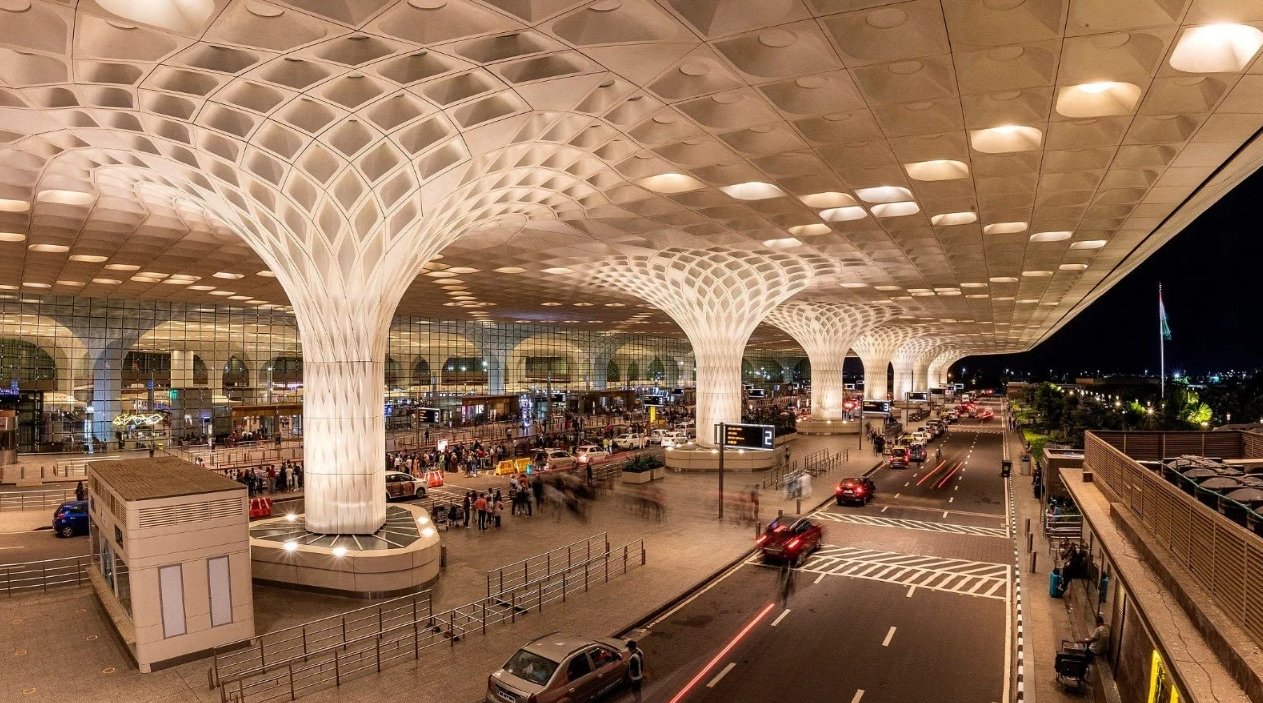
The lotus motif defines the airport's architectural language. Elegant roof overhangs and expansive forms resemble petals unfolding in the morning sunlight, creating a dynamic and visually striking structure. Passengers are welcomed through a sequence of geometric portals that flow seamlessly into a continuous ceiling system, eventually culminating in signature lotus-inspired columns that serve as intuitive and ceremonial entry points.
The airport also embraces technology as an integral part of its identity. A carefully curated digital art programme introduces dynamic and interactive installations throughout the terminal, enriching passenger experiences at key pause points. These installations reinforce the airport's future-ready character while celebrating India's youthful energy and innovation-driven mindset.
By combining cutting-edge architecture, advanced functionality, and cultural symbolism, Navi Mumbai International Airport establishes itself as one of the most forward-looking aviation gateways in the world.
The inclusion of both Guwahati and Navi Mumbai airports in the Prix Versailles World's Most Beautiful Airports 2026 list is a testament to India's evolving approach to infrastructure development. Modern airports are no longer just transportation facilities, they are cultural ambassadors, architectural landmarks, and symbols of national progress.
While Guwahati Airport showcases the richness of Northeast India's heritage through sustainable and culturally immersive design, Navi Mumbai Airport demonstrates India's confidence in shaping the future through innovation, engineering excellence, and iconic architecture.
Being recognized alongside major international aviation hubs from China, Germany, Cambodia, and the United States highlights India's growing reputation for creating airports that are not only operationally efficient but also globally admired for their beauty and vision.
As India continues its aviation expansion, these two award-winning airports set a new benchmark for what world-class airport design can achieve where culture, sustainability, technology, and passenger experience come together to create unforgettable gateways to the nation.

Recent Posts
What's the Best eSIM for India? Comparing Providers
India to Build 100 Airports in the Next 10 Years with ₹30,000 Crore Investment

Serengeti Safari & Kilimanjaro Climbing: The Complete Tanzania Adventure Guide for Choosing Routes, Costs, Seasons and Safari Experiences
10 Smart Ways To Save Money While Traveling In India

Discover Eastern Nepal: Nepal's Most Underrated Trekking Region

Everest Three High Pass Trek vs Gokyo Lake Trek: Route, Difficulty, Cost & Choosing a Trekking Company in Nepal
India Plans to Build World’s Highest Cricket Stadium in Ladakh at 11,800 Feet

Restaurants, Warehouses, Quick Commerce Under Scanner as Maharashtra FDA Cracks Down

40+ Best Travel Credit Cards in India You Need To Know