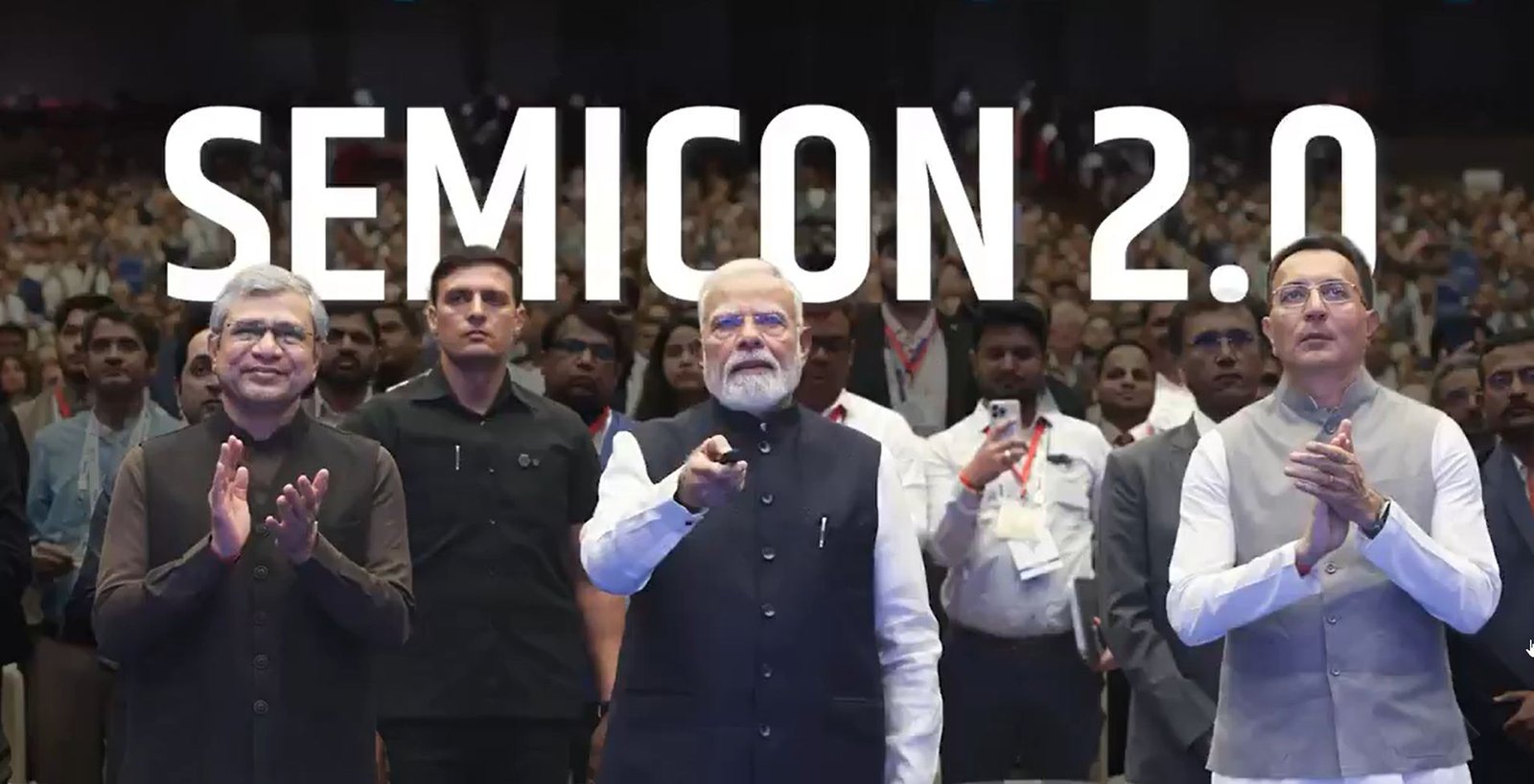
Semicon 2.0: India's ₹1.27 Lakh Crore Semiconductor Expansion Plan
Semicon 2.0: India's ₹1.27 Lakh Crore Semiconductor Expansion Plan
Posted on: 17 September 2026 | Published by: Tarundeep | Category: News
India is taking the next major step in its semiconductor journey with the launch of Semicon 2.0, a program designed to expand capabilities across the entire semiconductor value chain. Following the foundational work completed under Semicon 1.0, the new phase aims to accelerate investments, strengthen manufacturing, boost chip design, support research, and develop a skilled workforce.
Approved by the Union Cabinet with a fiscal outlay of ₹1,27,500 crore, Semicon 2.0 is intended to help India establish a stronger and more resilient position in the global semiconductor industry.
What Is Semicon 2.0?
Speaking at SEMICON India 2026, Union Minister for Electronics and Information Technology Ashwini Vaishnaw outlined the government's vision for the next phase of semiconductor development in the country.
While Semicon 1.0 focused primarily on creating the initial framework for India's semiconductor sector, Semicon 2.0 is designed to expand and strengthen the broader ecosystem. The focus now extends beyond individual projects to building interconnected capabilities across design, manufacturing, equipment, packaging, research, materials, and workforce development.
The government has already received investment commitments worth approximately ₹1 lakh crore, equivalent to roughly $11-12 billion, under the Semicon 2.0 ecosystem.
These investments are expected to be rolled out over the next two to three years, subject to corporate approvals and formal announcements.
Also Read: 40+ Best Travel Credit Cards in India You Need To Know
Major Investment and Employment Potential
One of the key goals of Semicon 2.0 is job creation and industrial expansion.
Key projections include:
- Around ₹1 lakh crore in investment commitments
- Approximately $11-12 billion in expected investments
- Nearly 1 lakh new employment opportunities across the semiconductor sector
- Training of 1 lakh technicians over five years
- Support for 200 semiconductor design startups
These targets highlight the government's intention to create long-term economic value while strengthening India's technology capabilities.
The Six Pillars of Semicon 2.0
1. Expanding India's Semiconductor Design Ecosystem
The first pillar focuses on scaling the country's chip design capabilities.
The government plans to support both startups and established companies through:
- Funding and venture capital access
- Support for fabless semiconductor companies
- Customer discovery opportunities
- Stronger intellectual property protection
A key target is to support 200 semiconductor design startups. During Semicon 1.0, 105 startups received support, and 20 of them successfully secured venture capital funding.
The initiative also aims to help companies move beyond chip-level development into systems design, enabling them to build more complex technology solutions.
2. Strengthening Machines and Materials Capabilities
The second pillar focuses on semiconductor manufacturing equipment, machinery, and materials.
According to the government, global capital equipment companies are increasingly exploring opportunities in India for both design and manufacturing operations.
India's growing precision manufacturing base is expected to play a significant role in supporting industries such as Semiconductors, Aerospace, Aviation and Advanced electronics.
This could create additional high-quality jobs and attract international investment.
3. Expanding Semiconductor Fab Capacity
Fabrication facilities, commonly known as fabs, remain a crucial component of the semiconductor ecosystem.
Under Semicon 2.0, India aims to encourage growth across multiple fabrication technologies, including:
- Silicon fabs
- Memory fabs
- Logic fabs
- Compound semiconductor fabs
- Display fabs
The government believes global confidence in India's semiconductor manufacturing potential continues to increase, driving greater industry interest.
4. Building Advanced Packaging Capabilities
Advanced packaging has become increasingly important as chipmakers seek better performance, efficiency, and system-level integration.
Semicon 2.0 includes focused support for developing packaging technologies through the growth of the:
- ATMP (Assembly, Testing, Marking and Packaging) industry
- OSAT (Outsourced Semiconductor Assembly and Test) sector
The goal is to strengthen India's position in a critical and rapidly growing segment of the semiconductor value chain.
5. Promoting Applied Research and Development
Research and innovation form the fifth pillar of the program.
The government's approach encourages collaboration among:
- Industry
- Academic institutions
- Government agencies
Companies will be encouraged to propose research projects with joint funding participation. The emphasis will be on practical outcomes and technologies that can directly strengthen India's semiconductor capabilities.
6. Developing Semiconductor Talent
Talent development is at the heart of the long-term strategy.
Around 400 universities and institutions are already participating in semiconductor chip-design education initiatives launched during the first phase.
Also Read: India to Build 100 Airports in the Next 10 Years with ₹30,000 Crore Investment
Under Semicon 2.0, educational programs will be upgraded to help students progress from foundational chip-design knowledge to advanced systems-design expertise.
The government has also established a goal of training 1 lakh technicians in five years through partnerships with industry and international institutions, including organizations such as ITRI, Taiwan.
Building More Than Manufacturing Facilities
A central theme of Semicon 2.0 is that semiconductor success requires much more than fabrication plants.
The government's strategy emphasizes building domestic capabilities in:
- Capital equipment
- Semiconductor materials
- Specialty gases
- Chemicals
- Precision manufacturing
- Supply-chain infrastructure
Developing these supporting sectors is expected to create a more self-reliant and resilient semiconductor ecosystem while reducing dependence on external supply chains.
India's semiconductor strategy is also focused on competing internationally.
According to the government, project selection, construction, and production planning have all been guided by two critical factors:
- Quality
- Cost competitiveness
Some semiconductor facilities have already entered commercial production, while additional projects are rapidly expanding capacity to serve global customers.
Key Agreements and Announcements at SEMICON India 2026
SEMICON India 2026 witnessed a series of partnerships and announcements intended to strengthen the semiconductor value chain.
Notable developments included:
- Commercial device exchange between Suchi Semicon Pvt Ltd and eInfochips Pvt Ltd
- Collaboration between Tata Electronics and Nexperia B.V. covering wafer manufacturing, testing, innovation, and technology cooperation
- Development of a 363-acre vendor park in Dholera, Gujarat by Tata Electronics and Ascendas First Space
- Partnership between Tata Electronics and Fujifilm Corporation for localization of semiconductor materials
- Supply agreement between Tata Electronics and JSR Corporation for photoresists and advanced chemicals
- Collaboration between Tata Electronics and BESI Singapore Pte. Ltd. to strengthen advanced packaging capabilities
- Semiconductor design, technology, and talent partnership between Tata Electronics and Semiconductor Laboratory (SCL)
- Talent development initiative involving Tata Electronics, Gati Shakti Vishwavidyalaya, L&T EduTech, and Jacobs Solutions
- Joint semiconductor packaging efforts by Kaynes Semicon and OptoML India
- Packaging and testing collaboration involving Kaynes Semicon, GridCrest Technologies, and Sensesemi
- Launch of an Introduction to Semiconductors course by the India Semiconductor Mission and Intel India
- Workforce development partnership between Intel India and NAMTECH
- Inauguration of the HORIBA KOACH Experience Centre
- Announcement of six ChipIN Regional Centres to broaden access to chip-design infrastructure
- Commercial production announcement by CDIL Semiconductors and collaboration with Shindengen Electric Manufacturing Company, Japan
SEMICON India 2026: Industry Participation
The event, held at Yashobhoomi, New Delhi, runs until September 19, 2026 and reflects growing international interest in India's semiconductor sector.
Key event highlights include:
- More than 600 participating companies
- Approximately 50,000 expected visitors
- Representation from 52 countries
- Over 400 executives
- More than 150 speakers
- Six country pavilions representing:
- Japan
- South Korea
- Malaysia
- Netherlands
- Singapore
- Sweden
The exhibition also features state pavilions, startup showcases, innovation programs, student hackathons, and workforce development initiatives.
Key Takeaways: What Readers Should Know
- Semicon 2.0 has been approved with a fiscal outlay of ₹1,27,500 crore.
- Around ₹1 lakh crore ($11-12 billion) in investment commitments have already been received.
- India expects nearly 1 lakh new jobs across the semiconductor ecosystem.
- The program is built around six pillars: design, machines and materials, fabs, advanced packaging, R&D, and talent development.
- The government aims to support 200 semiconductor design startups.
- A target has been set to train 1 lakh technicians within five years.
- Multiple industry partnerships and infrastructure projects were announced during SEMICON India 2026.
Conclusion
Semicon 2.0 represents India's effort to move from establishing semiconductor manufacturing capacity to creating a comprehensive technology ecosystem. With substantial financial support, strong investment interest, startup development initiatives, workforce training goals, and a focus on supply-chain resilience, the program seeks to position India as a trusted participant in the global semiconductor industry.
If its targets are achieved, Semicon 2.0 could significantly expand India's role in semiconductor design, manufacturing, packaging, research, and talent development over the coming decades.

Recent Posts
Semicon 2.0: India's ₹1.27 Lakh Crore Semiconductor Expansion Plan

What's the Best eSIM for India? Comparing Providers

India to Build 100 Airports in the Next 10 Years with ₹30,000 Crore Investment

Serengeti Safari & Kilimanjaro Climbing: The Complete Tanzania Adventure Guide for Choosing Routes, Costs, Seasons and Safari Experiences

10 Smart Ways To Save Money While Traveling In India

Discover Eastern Nepal: Nepal's Most Underrated Trekking Region

Everest Three High Pass Trek vs Gokyo Lake Trek: Route, Difficulty, Cost & Choosing a Trekking Company in Nepal

India Plans to Build World’s Highest Cricket Stadium in Ladakh at 11,800 Feet

Restaurants, Warehouses, Quick Commerce Under Scanner as Maharashtra FDA Cracks Down